

Improving Operations with PDCA
A practical guide to using Plan–Do–Check–Act to test and refine operational changes.
Test and Refine Changes with PDCA
Turn a problem into a test
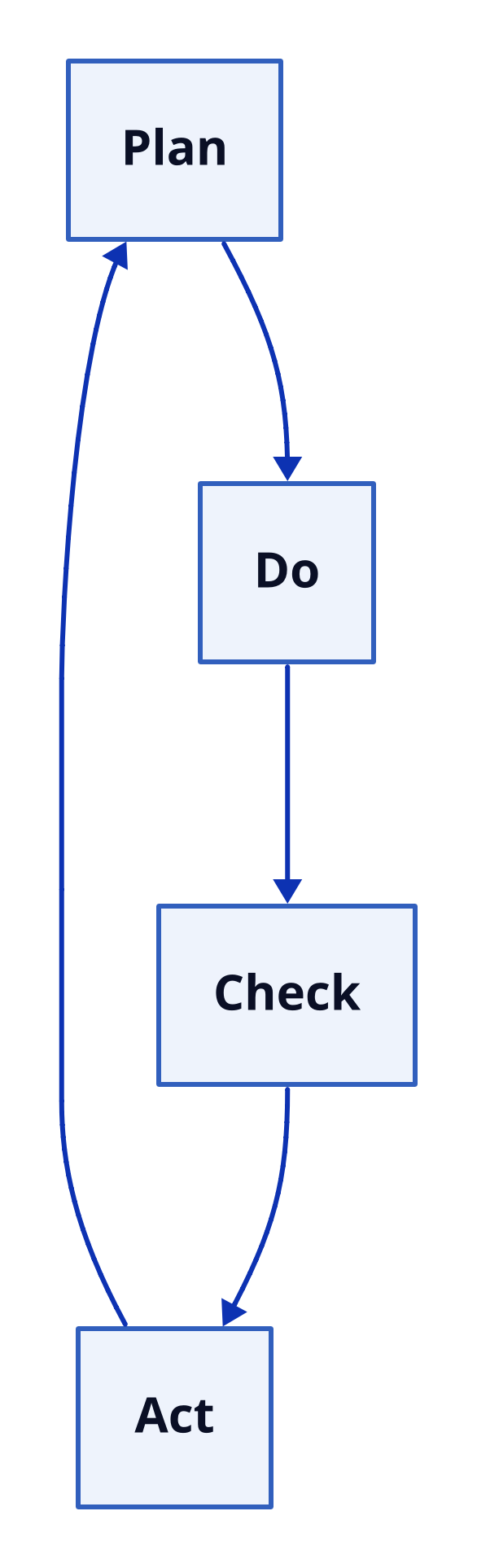
Plan–Do–Check–Act (PDCA) makes improvement a measured cycle. Plan by defining one specific problem and recording a baseline: what is happening before the change? Do by testing a small, manageable change. Check by comparing results with that baseline and reviewing feedback from staff and guests. Act by adopting the change if it works, revising it if it does not, and continuing to monitor.
Work through a room-readiness example
Suppose rooms are sometimes reported ready before inspection is complete. First, record how often this happens to establish the baseline. Next, test a final room-status confirmation between housekeeping and the front desk. Then compare how often premature “ready” reports occur during the test with the baseline, and consider staff and guest feedback. If the change helps, adopt it and keep monitoring; if not, revise the approach and test again.
A better readiness rate alone does not prove quality: rooms still need to be clean, safe, and correctly prepared. PDCA helps teams improve a defined process while checking whether the change works in context.
Text description
The PDCA cycle Four process nodes are arranged from top to bottom: Plan, Do, Check, and Act. Arrows connect each step to the next, and an arrow returns from Act to Plan. Layout: down. Plan Do Check Act Plan → Do Do → Check Check → Act Act → Plan