

Integrated Waste Management
How local data supports coordinated waste prevention, recovery, and safe management of residuals across the full material pathway.
Designing a Coordinated Waste System
One system, not one facility
coordinates the steps that materials pass through—from generation and prevention at the source to separation, collection, processing, and the final management of residuals. A processing facility alone is not a complete solution: the system also needs suitable collection and transport, safe handling, and a plan for what remains after recovery.
The offers a general preference: prevent waste first; then support reuse and recycling or composting; recover energy from suitable remaining materials; and treat or dispose of residuals. It is a guide, not a rigid rule. Safety, technical feasibility, environmental impacts, material characteristics, and local circumstances affect which options are appropriate. No single approach fits every material.
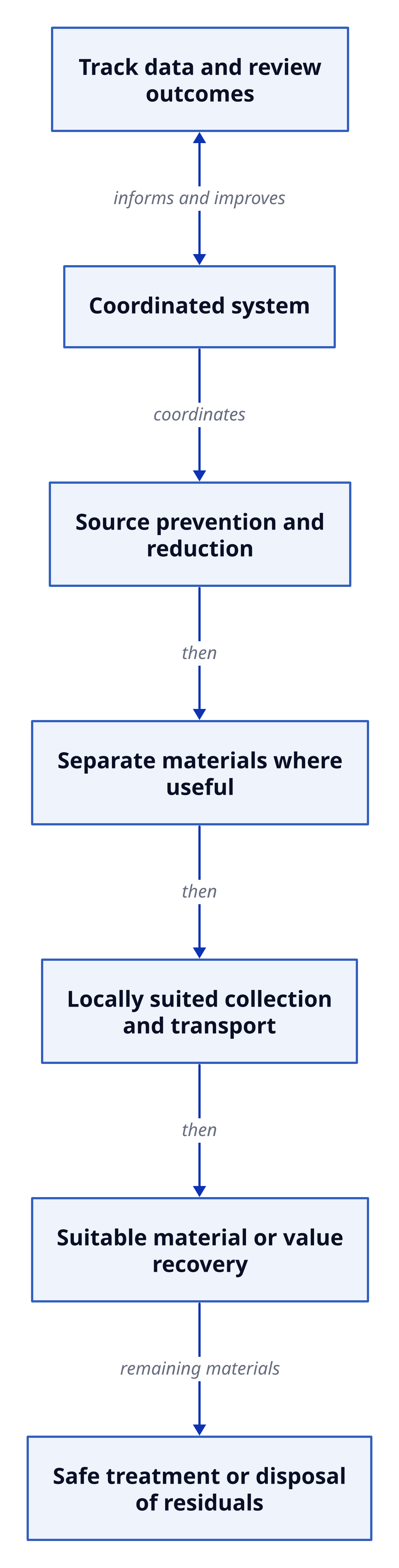
Text description
Integrated waste pathway A top-to-bottom diagram shows data and review linked in both directions with a coordinated system. The system leads through source prevention and reduction, separation, local collection and transport, suitable recovery, and safe residual treatment or disposal. Layout: down. Coordinated system Source prevention and reduction Separate materials where useful Locally suited collection and transport Suitable material or value recovery Safe treatment or disposal of residuals Track data and review outcomes Track data and review outcomes ↔ Coordinated system (informs and improves) Coordinated system → Source prevention and reduction (coordinates) Source prevention and reduction → Separate materials where useful (then) Separate materials where useful → Locally suited collection and transport (then) Locally suited collection and transport → Suitable material or value recovery (then) Suitable material or value recovery → Safe treatment or disposal of residuals (remaining materials)
Let local evidence guide choices
A community’s waste characterization can show which materials make up a substantial share of its waste. For example, if it finds a large share of food scraps, it could first prevent avoidable food waste. It could then collect unavoidable scraps separately for composting or digestion, while sending contaminated or otherwise unsuitable residues to appropriate treatment or disposal. This links prevention, separation, recovery, and safe residual management rather than relying on a single technology.
System design depends on reliable local data and the full material pathway. Track quantities, costs, service performance, and environmental outcomes, then review the results and adjust as conditions change. Safe handling of hazardous or special streams and control of risks to people and the environment are also part of the design.