

How Accountability Systems Work
A practical introduction to how accountability connects organizational goals with clear responsibilities, evidence, review, and follow-up—and why it supports prevention and improvement as well as fair responses to problems.
From Expectations to Follow-Through
Accountability is a connected process
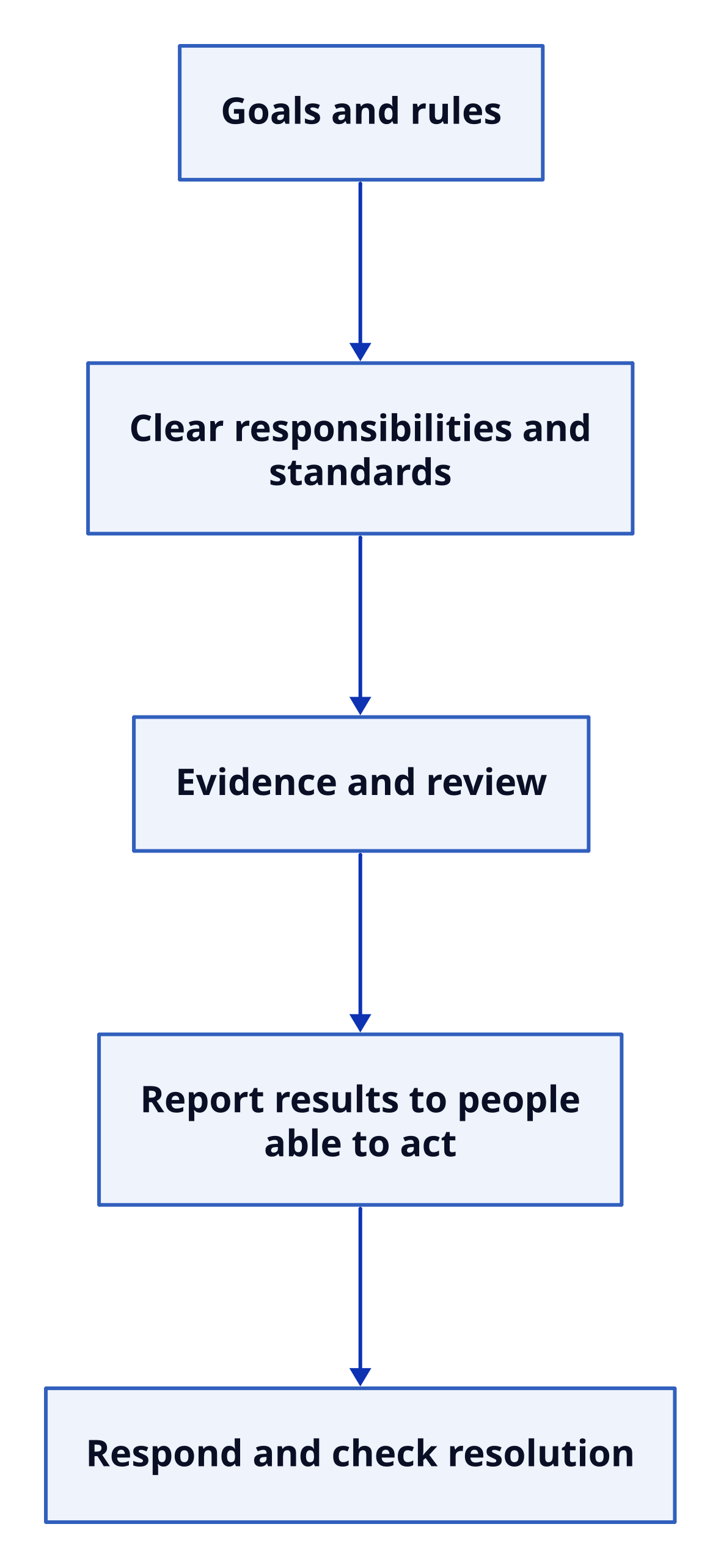
An accountability system links organizational goals and rules to named responsibilities, evidence of performance, review, and follow-up. It clarifies what people are expected to do, how performance will be assessed, who receives the results, and what happens when expectations are not met. That makes accountability more than punishment: clear expectations and monitoring can prevent problems or reveal them early, while review and follow-up help correct weaknesses and recognize effective performance.
Text description
Accountability from expectations to follow-up Five downward-connected boxes: Goals and rules; Clear responsibilities and standards; Evidence and review; Report results to people able to act; Respond and check resolution. Layout: down. Goals and rules Clear responsibilities and standards Evidence and review Report results to people able to act Respond and check resolution Goals and rules → Clear responsibilities and standards Clear responsibilities and standards → Evidence and review Evidence and review → Report results to people able to act Report results to people able to act → Respond and check resolution
Make ownership and evidence clear
Goals and requirements become usable standards when they specify the required result or conduct, the responsible roles, how performance can be verified, and relevant deadlines or escalation limits. Expectations work best when they are understandable, achievable, communicated before evaluation, and measurable where practical.
The source’s purchasing-policy example shows how duties can be separated and documented: a program manager documents the need, a separate official authorizes the purchase, and finance staff reconcile the payment. These steps identify who does what and leave evidence for review. Separation also reduces the risk that one person could initiate, approve, and conceal an improper transaction.
Monitoring then compares activity with expectations. Reports should give relevant decision-makers the expectation, evidence, outcome, known limitations, and any corrective action—not just an unexplained score. Employees and supervisors may need results for day-to-day correction, while senior managers or oversight bodies may need information about significant risks or independent review.
Respond fairly, then verify follow-through
A response should fit the issue. If a performance gap stems from unclear instructions or insufficient training, coaching, resources, or a time-bound improvement plan may be appropriate. A control failure may call for containment, investigation of its cause, assigned corrective actions, and follow-up testing. Suspected misconduct requires appropriate fact-finding and a fair process under applicable policies and law.
Responses should be timely, consistent, documented, and proportionate. Distinguish deliberate misconduct from mistakes, weak systems, or unrealistic expectations; accountability can involve both individual consequences and organizational improvement. After a serious problem, examine which controls failed and whether warning signs were missed. Then check that corrective actions worked. Recognizing effective performance, applying standards without favoritism, and using findings to reduce recurrence help strengthen the system over time.