

How Mutual Funds and ETFs Are Structured
Explains how mutual funds and ETFs pool investors’ money, hold portfolio assets as separate legal entities, and describe their structure and terms in a prospectus.
The Fund as a Separate Investment Pool
The Fund as a Separate Investment Pool
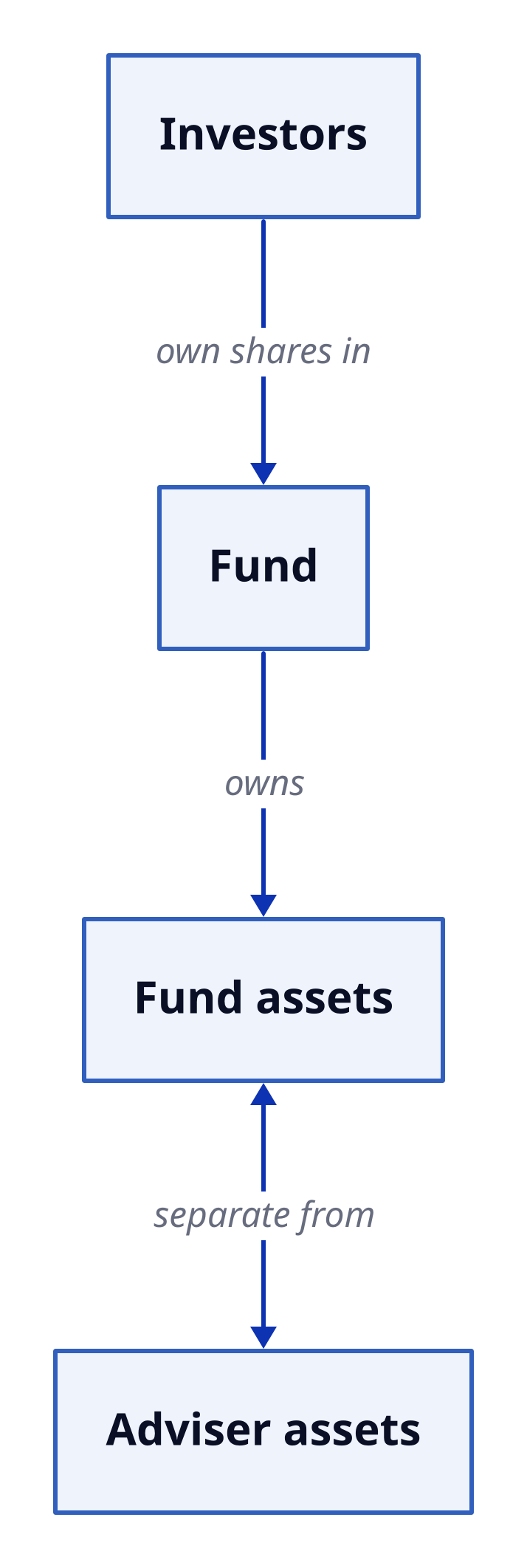
A mutual fund or exchange-traded fund (ETF) pools money from many investors to buy a portfolio of investments. The fund is a separate legal entity: investors own shares in the fund, while the fund—not its investors individually—owns the securities and other assets in its portfolio.
The fund’s assets are kept separate from its investment adviser’s assets. In the United States, a fund may be organized under state law as a trust or corporation. Many funds are externally managed, relying on specialist firms rather than maintaining their own operating staff. The fund’s prospectus describes its objectives, operating arrangements, risks, and fees.
Owning shares in a fund is therefore not the same as directly owning each security in its portfolio.
Text description
Ownership and asset separation Investors own shares in the fund. The fund owns fund assets. Fund assets are separate from the investment adviser’s assets. Layout: down. Investors Fund Fund assets Adviser assets Investors → Fund (own shares in) Fund → Fund assets (owns) Fund assets ↔ Adviser assets (separate from)