

Effluent, Sludge, and Activated-Sludge Flows
Learn how wastewater treatment separates pollutants into treated liquid and residual solids, where the main sludge types come from, and how RAS and WAS serve different roles in activated-sludge systems.
Two Outputs, Several Sources of
Wastewater treatment produces two linked outputs: treated liquid, called , and concentrated residual solids, commonly called . Removing pollutants from the water does not necessarily make them disappear; some are transferred into the solids. A plant therefore has to manage both the liquid and solids streams.
can form at several points. Its type often indicates where it forms and what separates it from the wastewater:
| Sludge type | Where it forms | What it contains or how it forms |
|---|---|---|
| Primary sludge | Settles in primary clarifiers | Readily settleable organic and inorganic solids |
| Secondary sludge | Separated after biological treatment | Largely microorganisms and other solids |
| Chemical sludge | Can form when chemicals are added | Can result from removing pollutants such as phosphorus |
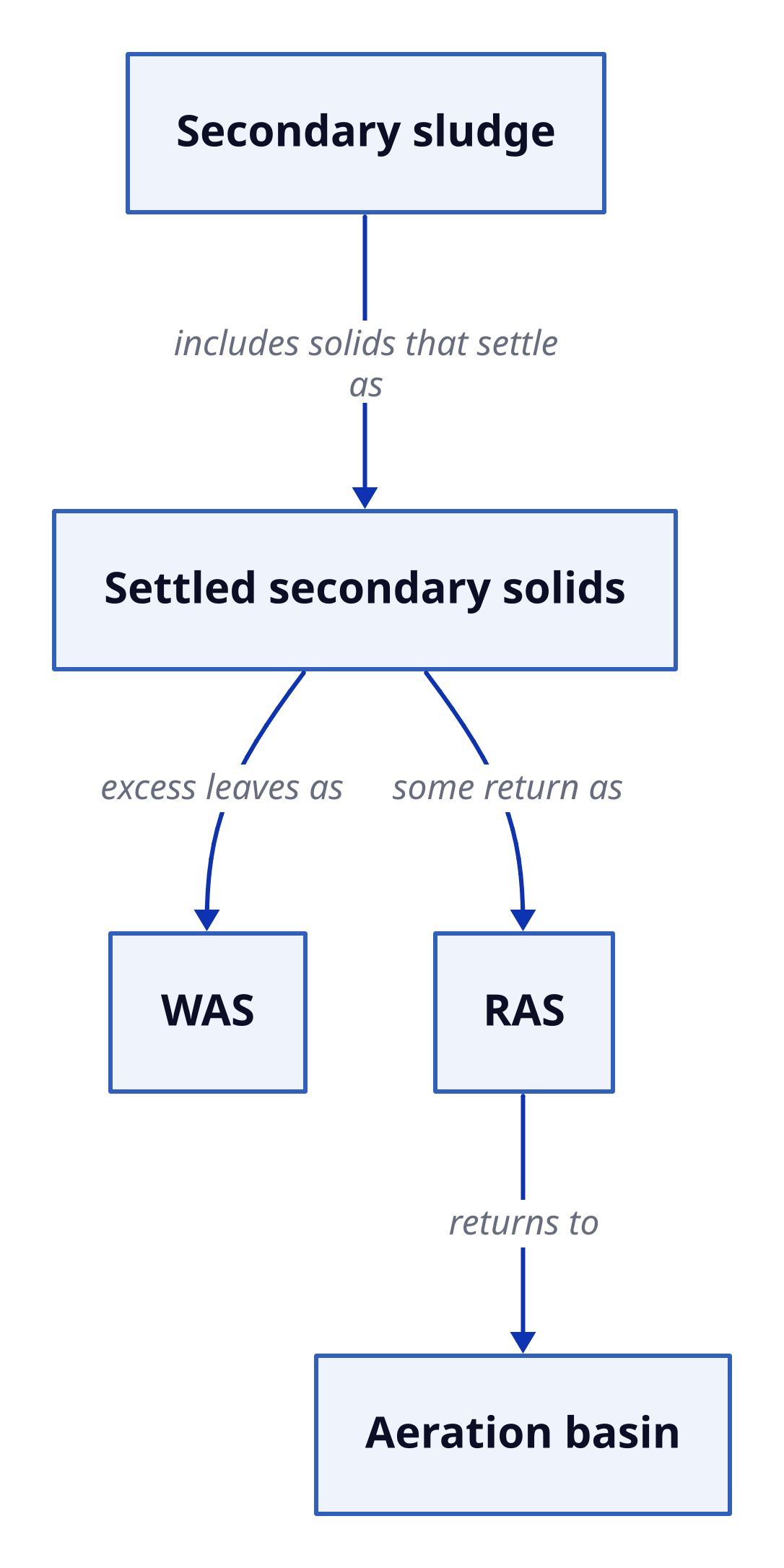
In an activated- system, some settled secondary solids return to the aeration basin as return activated (). Excess solids leave the process as waste activated (). In other words, some settled solids follow a return route and the excess follows a removal route. and are both secondary solids, but they have different destinations in the treatment process.
Text description
Two destinations for settled solids A downward concept diagram links secondary sludge to settled secondary solids. Some settled solids return as RAS to the aeration basin; excess settled solids leave as WAS. Layout: down. Secondary sludge Settled secondary solids RAS Aeration basin WAS Secondary sludge → Settled secondary solids (includes solids that settle as) Settled secondary solids → RAS (some return as) RAS → Aeration basin (returns to) Settled secondary solids → WAS (excess leaves as)