

Land Pollution: Sources, Pathways, and Cleanup
Explains how contamination, movement, and exposure connect, and how cleanup choices depend on site conditions and intended uses.
Understanding Contamination and Cleanup Goals
Understanding Contamination and Cleanup Goals
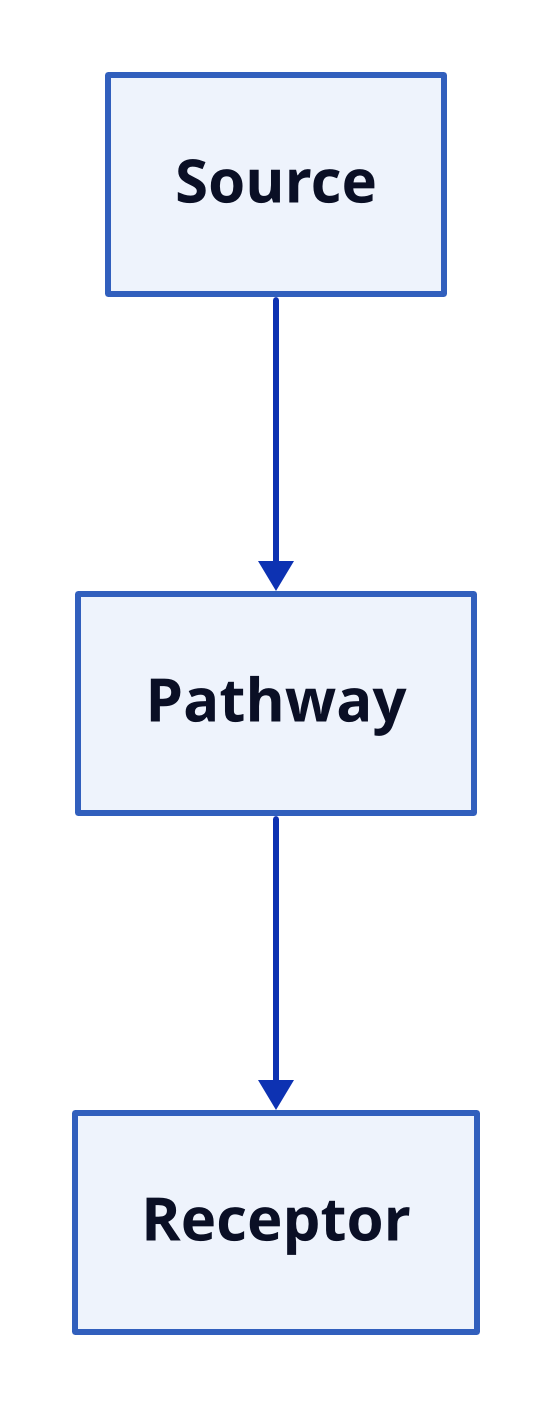
Land pollution occurs when chemicals or wastes build up in soil, groundwater, or solid-waste deposits at levels that can harm people or ecosystems. A useful way to understand the risk is to trace three links: a source of contamination, a pathway by which it moves, and a receptor—a person or ecosystem that may be exposed. Cleanup aims to interrupt that connection; it does not always require removing every contaminant.
Remedies work in different ways. Some remove or destroy contaminants. Others limit their movement or reduce exposure. For example, caps and covers can reduce contact with contaminated soil or waste and limit rainwater infiltration, reducing the potential for contaminated runoff or leachate. Low-permeability vertical barriers, such as slurry walls, can isolate contaminated soil or redirect groundwater flow. These methods contain contamination; they do not necessarily destroy or remove it. Containment may be used when treatment is impractical or alongside treatment to limit exposure while cleanup proceeds.
No single remedy fits every site. Selection depends on the contaminants, site geology and hydrology, the risks, and intended land and water uses.
Text description
Source–Pathway–Receptor Three boxes are arranged vertically and connected by downward arrows. From top to bottom, the boxes are labeled Source, Pathway, and Receptor. Layout: down. Source Pathway Receptor Source → Pathway Pathway → Receptor